

Israel’s recent passage of a controversial death penalty law has reignited global debate over justice, equality, and the ethics of capital punishment. Approved by the Knesset after hours of heated debate, the legislation introduces death by hanging as the default sentence for Palestinians convicted of deadly militant attacks in military courts. While supporters argue the law is necessary for deterrence and national security, critics say it is fundamentally discriminatory and unlikely to be applied equally particularly when it comes to Jewish extremists.
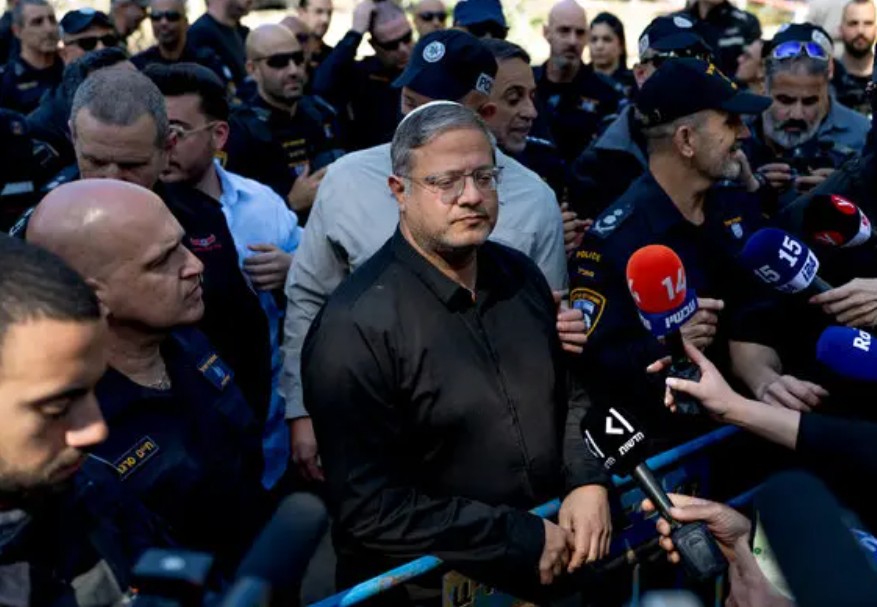
The law emerges in the shadow of the October 7 Hamas attack on Israel and the devastating war in Gaza that followed. In this tense political climate, Israel has seen a shift toward more hardline policies, especially under the leadership of Benjamin Netanyahu and his right-wing coalition. The death penalty law is widely viewed as a reflection of this broader transformation.
Contents
- 1 A Rarely Used Punishment Returns and Video
- 2 Key Provisions and Legal Structure
- 3 Disparity in Application: A Central Controversy
- 4 Political Drivers Behind the Law
- 5 Arguments in Favor: Deterrence and Security
- 6 Criticism and International Backlash
- 7 Military Courts and Due Process Concerns
- 8 Strategic Risks and Unintended Consequences
- 9 Religious and Ethical Opposition
- 10 A Law at a Crossroads
A Rarely Used Punishment Returns and Video
Capital punishment has technically existed in Israel since its founding, but it has been used only twice in the country’s history. The first case involved Meir Tobianski, an army officer wrongfully accused of espionage and executed in 1948 only to be exonerated after his death. The second, more widely known case was that of Adolf Eichmann, one of the architects of the Holocaust, who was captured, tried, and hanged by Israel in 1962.
Video explaining the mystery behind Israel’s death penalty law
For decades, Israel has largely avoided implementing the death penalty, aligning itself with many Western democracies that have abolished or abandoned the practice. Even countries like the United States which still uses capital punishment have extensive legal safeguards in place to prevent wrongful executions. Israel’s new law, however, introduces a framework that critics argue lacks such protections.
Key Provisions and Legal Structure
The newly passed legislation establishes death by hanging as the default punishment for Palestinians convicted of deadly attacks in Israeli military courts. While Israeli civilian courts retain the ability to impose the death penalty on citizens both Jewish and Arab this applies only in cases where the crime is deemed an attempt to “negate the existence of the State of Israel.”

Importantly, the law is not retroactive and will not affect Palestinians already imprisoned. However, it imposes strict timelines: executions must be carried out within 180 days, significantly limiting opportunities for appeals or retrials. Additionally, the law removes clear pathways for pardons or sentence commutations, raising concerns among legal experts about due process.
Judges may still exercise discretion in certain unspecified circumstances, but the overall structure of the law suggests a streamlined process designed to ensure swift implementation.
Disparity in Application: A Central Controversy
One of the most contentious aspects of the law is its perceived unequal application. Legal scholars and human rights advocates argue that, despite its wording, the law is effectively designed to target Palestinians while excluding Jewish Israelis even those who commit similarly violent acts.
A frequently cited example is Baruch Goldstein, a Jewish extremist who killed 29 Palestinians in 1994. Under the current legal framework, experts argue it would be nearly impossible to apply the new death penalty law to someone like Goldstein.
According to Yoav Sapir, the law’s structure makes its intent clear: it is meant to address Palestinian militancy, not Jewish terrorism. This interpretation has fueled accusations of systemic discrimination and unequal justice.
The Palestinian rights organization Adalah has been particularly vocal, arguing that the law violates fundamental principles of equality and non-discrimination under international law.
Political Drivers Behind the Law
The passage of the law is closely tied to Israel’s evolving political landscape. Hardline figures such as Itamar Ben-Gvir have long advocated for harsher measures against Palestinian militants, including the reintroduction of the death penalty.
Public opinion has also played a role. Polls indicate that a majority of Jewish Israelis support the execution of Palestinian attackers, particularly in the wake of recent violence. This support has translated into political momentum, allowing the law to pass with relatively limited domestic opposition.
Symbolism has been a striking feature of the debate. Some lawmakers have worn noose-shaped pins in parliament to signal their support, underscoring the emotional and ideological intensity surrounding the issue.
Arguments in Favor: Deterrence and Security
Supporters of the law argue that it will serve as a powerful deterrent against future attacks. They claim that the threat of execution could discourage individuals from engaging in militant activities or participating in hostage-taking operations.
Moshe Saada, one of the architects of the legislation, has argued that failing to impose the death penalty encourages further violence. According to this view, harsh punishment is necessary to break the cycle of attacks and retaliation.
Proponents also suggest that executing convicted militants could reduce the incentive for groups like Hamas to capture Israeli hostages for prisoner exchanges. In recent years, such exchanges have involved thousands of Palestinian prisoners, highlighting the strategic importance of detainees.
Criticism and International Backlash
Despite these arguments, the law has faced strong criticism both within Israel and internationally. European countries including Britain, France, Germany, and Italy have expressed concern over what they describe as the law’s “de facto discriminatory character.”
Human rights organizations argue that the legislation undermines democratic principles and risks violating international legal standards. Legal challenges have already been filed with Israel’s Supreme Court, and some experts believe the law could ultimately be struck down.
Critics also point to the moral risks of capital punishment, including the possibility of executing innocent individuals. Given Israel’s past experience with wrongful execution, these concerns carry significant weight.
Military Courts and Due Process Concerns
A key issue lies in the use of military courts, which handle most cases involving Palestinians from the occupied West Bank. These courts operate under a different legal framework than Israel’s civilian system and offer fewer protections for defendants.
In military courts, a simple majority of judges is sufficient to impose a death sentence, unlike the unanimous jury requirement in many U.S. states. Additionally, defendants have limited access to appeals and no guaranteed path to clemency.
This lack of safeguards has raised alarms among legal experts, who warn that the system increases the risk of unjust outcomes.
Strategic Risks and Unintended Consequences
Some security experts argue that the law could backfire. Adi Rotem has suggested that executions might actually encourage further violence by creating martyrs and intensifying resentment.
There is also concern that the law could complicate hostage situations. Militants might be more motivated to capture Israelis in order to demand the cancellation of impending executions, potentially increasing the frequency of kidnappings.
These arguments highlight the complexity of using capital punishment as a tool of counterterrorism.
Religious and Ethical Opposition
Opposition to the law is not limited to secular or international critics. Some religious leaders within Israel have also spoken out against it. Benny Lau has argued that Jewish legal tradition places extremely high barriers on the use of capital punishment.
According to interpretations of the Talmud, executions should be exceedingly rare perhaps occurring only once in several decades. From this perspective, the new law represents a departure from deeply rooted ethical principles.
Rabbi Lau and others have described the legislation as driven more by revenge than by justice, raising questions about its moral foundation.
A Law at a Crossroads
As legal challenges move forward and international scrutiny intensifies, the future of Israel’s death penalty law remains uncertain. Its passage marks a significant shift in the country’s approach to security and justice, but it also exposes deep divisions within Israeli society.
At its core, the debate is about more than just punishment. It touches on fundamental questions of equality, human rights, and the rule of law in a context of ongoing conflict. Whether the law will ultimately be enforced, modified, or overturned, it has already reshaped the conversation around justice in Israel.
In a region defined by decades of tension and violence, the stakes could not be higher.