

The rise of social media has transformed how people connect, share, and consume content. However, it has also created an environment where privacy can be violated at an unprecedented scale. Few individuals understand this reality more painfully than Maddie Kowalski, a former University of Florida student whose life was deeply impacted after alleged videos involving her were shared online without consent. Now, in response to a separate viral controversy known as the “Kansas Bar Girl Incident,” Kowalski is once again speaking out this time not just about her own experience, but about what she believes is a widespread and deeply troubling pattern.
Contents
- 1 A Viral Incident Sparks Renewed Concern and Video
- 2 A Personal Plea for Attention
- 3 The Bigger Issue: A Pattern of Abuse
- 4 Inside the “Burnerverse”
- 5 The Role of Social Media Platforms
- 6 Victims Who Don’t Even Know
- 7 A Toxic and Unexpected Community
- 8 The Emotional Toll
- 9 Legal Protections and Their Limits
- 10 A Call for Change
A Viral Incident Sparks Renewed Concern and Video
The so-called “Kansas Bar Girl Incident” recently gained traction across platforms like TikTok and X (formerly Twitter). The situation reportedly involves a group of college students at a University of Kansas bar, where a man and a woman were allegedly filmed engaging in inside a bathroom stall. The footage quickly spread online, triggering intense backlash, debates over morality, and concerns about privacy.
Kansas Bar Girl and Journey Price Video
Full uncensored video of Kansas Bar Girl and Journey Price
kansas-bar-girl-and-journey-price-video.mp4
While many online users focused on the shock value of the video itself, Kowalski saw something far more serious: a familiar and dangerous pattern. To her, this was not an isolated event but another example of how easily individuals especially young women can become victims of non-consensual content sharing.
A Personal Plea for Attention
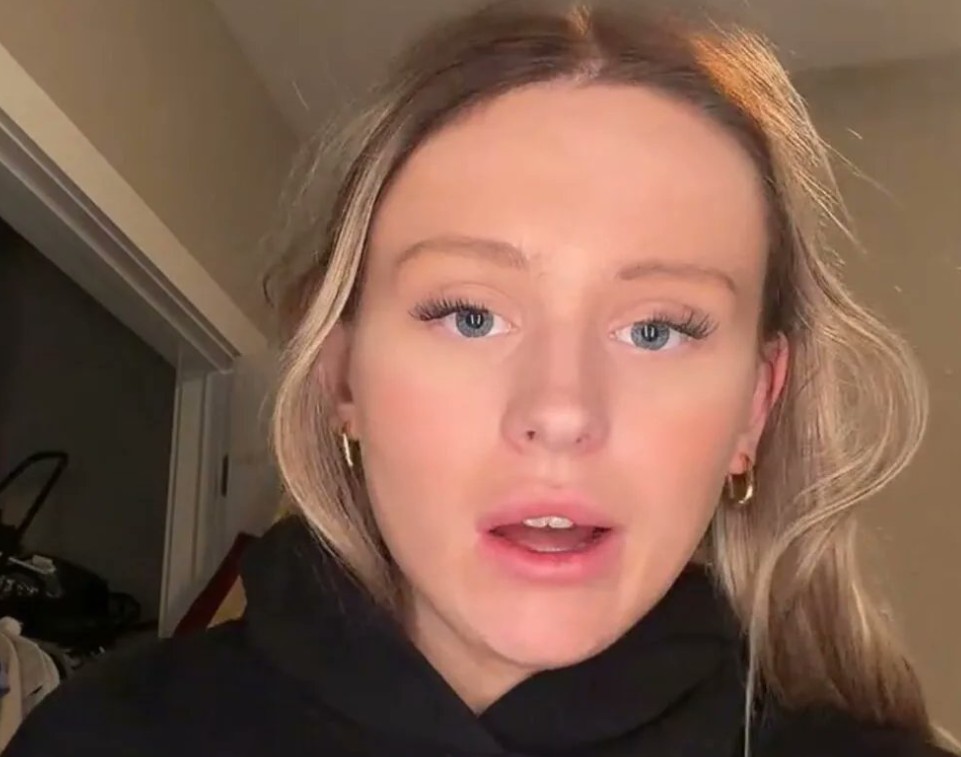
In a TikTok video addressing the incident, Kowalski began with an emotional appeal.

“Okay, if nobody ever listens to another thing I say, please just listen to this video,” she urged viewers, setting the tone for a message that was both urgent and deeply personal.
Drawing from her own experience, Kowalski explained how the unauthorized sharing of content had lasting consequences on her life. She expressed frustration that despite the severity of what happened to her, public attention quickly faded, leaving her to deal with the aftermath largely alone.
For Kowalski, the Kansas incident represents a continuation of the same harmful behavior that once upended her life.
The Bigger Issue: A Pattern of Abuse
Kowalski emphasized that these incidents are not random or isolated. Instead, she described them as part of a broader, systemic problem involving networks of individuals who repeatedly.

“This network of people ruined my life illegally,” she said. “And now they’re doing it to more girls, just like they did before.”
Her statement highlights a critical issue: the normalization of non-consensual content sharing. What may appear as a single viral scandal is often just one instance in a much larger cycle of exploitation.
Inside the “Burnerverse”
One of the most alarming aspects of Kowalski’s claims involves what she refers to as the “Burnerverse” a loosely organized network of anonymous social media accounts dedicated to sharing.
According to Kowalski, these accounts operate in a coordinated way. They upload videos, identify the people involved, and often go as far as exposing personal details such as names, schools, and social media profiles a practice known as doxxing.
But the harassment doesn’t stop there.
Kowalski revealed that many of these users gather in live audio chatrooms, such as Twitter Spaces, where they openly mock and degrade the individuals featured in the videos.
Curious and concerned, she decided to witness it herself.
“I joined one of these chats using a fake account,” she said. “And I was horrified. I felt sick listening to the things they were saying.”
Her firsthand experience paints a disturbing picture of online spaces where cruelty is not only tolerated but encouraged.
The Role of Social Media Platforms
A significant part of Kowalski’s message is directed at the platforms that host this content. She specifically called out major social media companies, arguing that they have failed to take adequate action.
“These accounts are posting girls’ bodies without their permission over and over again, and nobody is stopping them,” she said.
Kowalski believes that the problem is not due to isolated moderation failures but rather a systemic issue. According to her, harmful content is allowed to persist because enforcement is inconsistent and often too slow to prevent widespread damage.
Social media companies face undeniable challenges in moderating vast amounts of content. However, Kowalski’s criticism raises an important question: are these platforms doing enough to protect users from harm?
Victims Who Don’t Even Know
Perhaps one of the most chilling aspects of Kowalski’s warning is her belief that many victims are unaware their images or videos have been shared online.
“I’m convinced that half of the videos online involve people who don’t even know they’re being posted,” she said.
In her own case, Kowalski only became aware of the situation because the video went viral. Had it remained relatively obscure, she might never have known.
This highlights a hidden dimension of the problem. For every viral case that sparks public outrage, there may be countless others that go unnoticed leaving victims unknowingly exposed.
A Toxic and Unexpected Community
Another surprising revelation from Kowalski’s experience was the diversity of people participating in these online communities.
“It’s not just men,” she explained. “There are women involved too.”
She also noted the presence of older individuals, some of whom spend hours engaging in these discussions late into the night. The anonymity provided by burner accounts appears to attract people from various backgrounds, all contributing to a culture of harassment.
This challenges the common assumption that such behavior is limited to a specific group. Instead, it suggests a broader societal issue, where anonymity and group dynamics enable individuals to act in ways they might not in real life.
The Emotional Toll
For victims, the consequences of non-consensual image sharing can be devastating. Beyond the immediate embarrassment or shock, there are long-term psychological effects.
Kowalski described feeling anger, frustration, and a renewed sense of pain as she witnessed similar incidents happening to others.
“I was angry when it happened to me,” she said. “But now I’m angry all over again because it keeps happening.”
Her words reflect a broader emotional reality shared by many victims: the sense that justice is never fully achieved, and that the cycle continues unchecked.
Legal Protections and Their Limits
There have also been ongoing discussions about federal legislation aimed at strengthening protections and holding perpetrators accountable.
However, significant challenges remain. Identifying anonymous users, navigating jurisdictional issues, and enforcing laws across digital platforms are all complex tasks.
As Kowalski’s case illustrates, legal measures alone may not be enough to prevent harm.
A Call for Change
Kowalski concluded her message with a powerful call to action.
“I’m not sure what kind of action needs to be taken, but something has to be done,” she said.
Her statement reflects both urgency and uncertainty. While the solutions may not be clear-cut, the need for change is undeniable.
Addressing this issue will require a multi-faceted approach. Social media platforms must improve moderation systems and take faster action against harmful content. Lawmakers need to strengthen legal frameworks and ensure they are effectively enforced. And perhaps most importantly, society as a whole must reconsider how it engages with viral content.
The story of Maddie Kowalski and the “Kansas Bar Girl Incident” serves as a stark reminder of the darker side of digital culture. What begins as a viral moment can quickly become a life-altering event for those involved.
Kowalski’s message is clear: this is not just about one person or one incident. It is a systemic issue that affects countless individuals, often in silence.
As technology continues to evolve, so too must the systems and values that govern its use. Without meaningful change, the cycle of exploitation and harm is likely to continue impacting more lives with each passing day.
Her plea is simple but powerful: pay attention, take responsibility, and do something before it’s too late.