

The tragic death of Christopher Best is a sobering reminder of the unforgiving nature of the North and the fragile boundary between human curiosity and the wild. Below is a comprehensive article based on the provided outline, detailing the incident, the aftermath, and the systemic questions regarding Arctic safety.
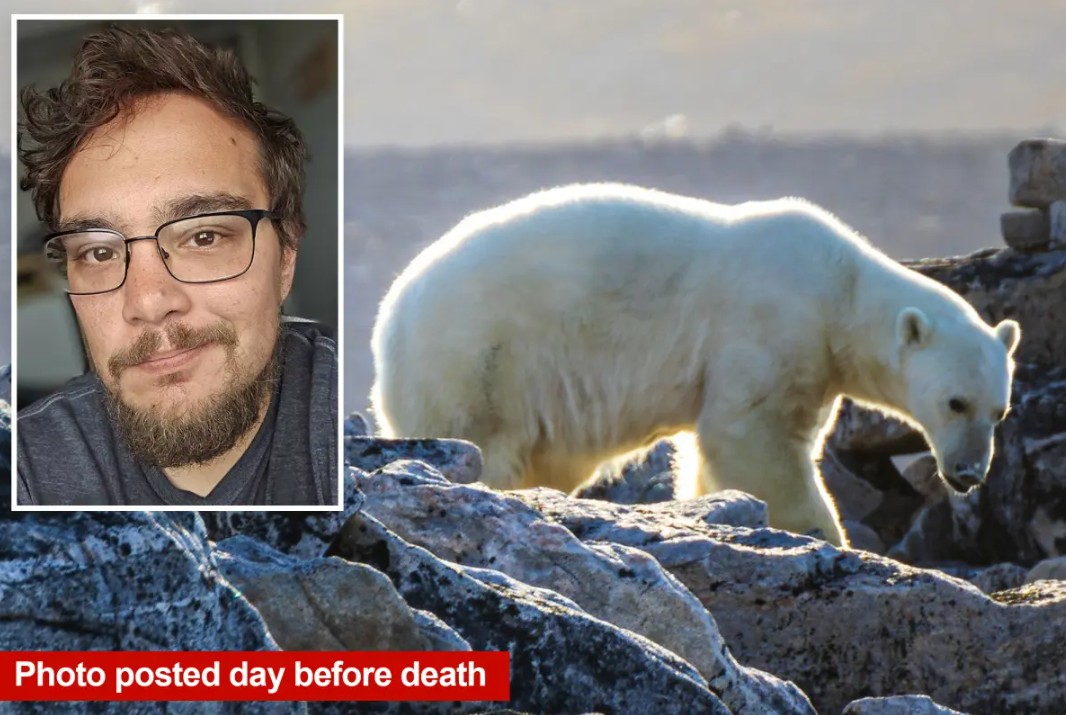
The Arctic is a landscape defined by its breathtaking beauty and its lethal silence. For those who work in the remote reaches of Northern Canada, the environment is a constant partner one that requires deep respect and unwavering vigilance. However, on August 8, that partnership turned into a nightmare for Christopher Best, a 34-year-old Canadian radar technician. In a tragedy that has sent shockwaves through the Arctic engineering community, Best was mauled to death by a pair of polar bears at a remote outpost on Brevoort Island.
What began as a routine assignment and a hobbyist’s desire to capture the majesty of the North through a camera lens ended in a violent confrontation that has left a family grieving and a corporation facing difficult questions about its safety protocols.
Contents
The Day of the Attack and Video
Christopher Best had arrived at the Brevoort Island facility just days before the incident. The island, located in the Qikiqtaaluk Region of Nunavut, serves as a critical node in Canada’s North Warning System a chain of unmanned and semi-manned radar stations. For a technician, the assignment was prestigious but isolated.
Driven by the awe of his new surroundings, Best sought to document the wildlife that makes the Arctic so iconic. On August 8, the day after he officially started his rotation on the island, he spotted a polar bear on the grounds. Lured by the opportunity for a once-in-a-lifetime photograph, Best stepped outside the safety of the facility’s main structures.
He did so despite clear warnings. A report into his death revealed that Best walked past a prominent sign specifically instructing employees to be on the lookout for bears. His confidence was likely bolstered by his perspective; earlier that day, he had posted photos of a bear online. When his worried parents reached out to him after seeing the images, asking if he was safe, he reassured them. “Chris said, ‘Well, yeah, they’re not close to us,’” his mother, Shelly Cox, later recalled in an interview with CTV News.
This sense of distance proved to be a fatal illusion.
A “Blind Spot” in the Wild
The report into the incident paints a harrowing picture of Best’s final moments. As he focused his lens on an enormous animal he believed was alone, he was unaware that a second bear was lurking nearby. This is a common predatory tactic of polar bears the world’s largest land carnivores who are masters of camouflage in the snow and rocky terrain of the High Arctic.
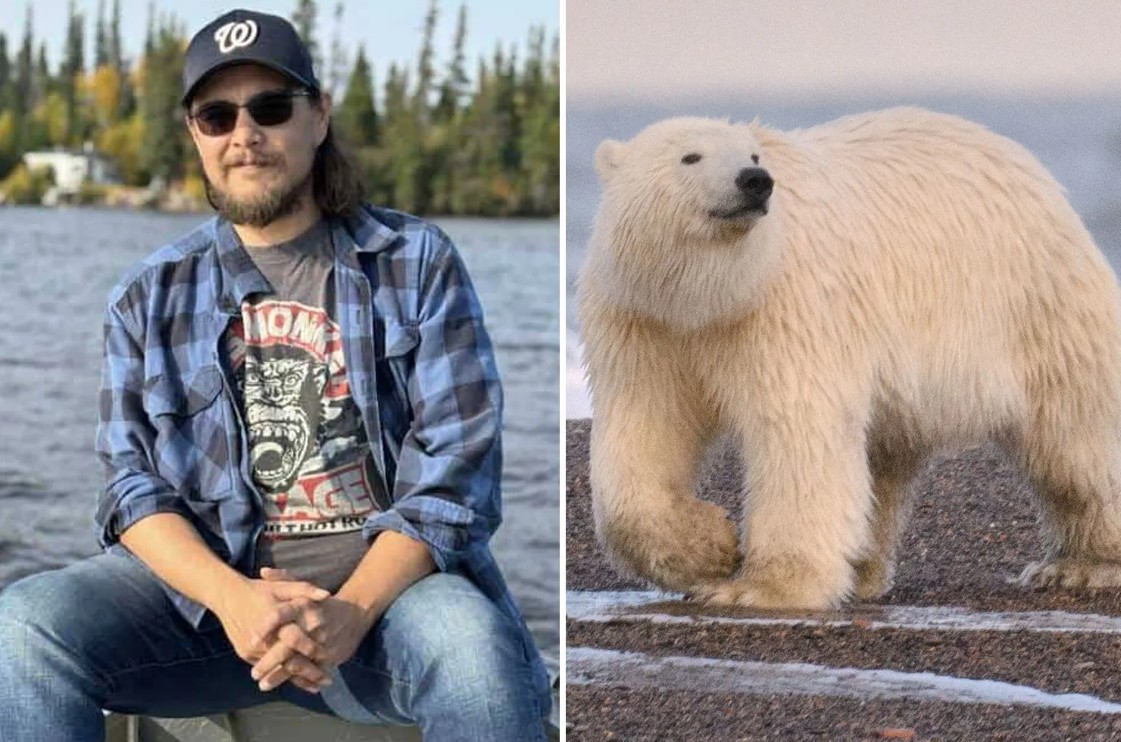
By the time Best realized he was not watching a solitary animal, it was too late. He was cornered. Both bears charged simultaneously. The speed and power of a polar bear are deceptive; despite their bulk, they can reach speeds of 40 kilometers per hour. Best had no chance to retreat to a secure building. The report confirmed that he was mauled and killed on the spot as both animals attacked.
“I don’t think he would have gone out if he would have known that second bear was there,” his mother said, reflecting on the tragic misjudgment. “We were just in shock.”
The Emergency Response: Seconds Too Late
The horror of the attack was witnessed by other employees at the base. The isolated nature of the outpost means that every staff member is trained in basic safety, but the speed of a bear attack often outpaces human response times.
Witnesses immediately called for a firearm. In the interim, an employee fired a “bear-banger” a non-lethal pyrotechnic device designed to create a thunderous noise to scare off predators. While bear-bangers are often effective in deterring curious or “nuisance” bears, they can sometimes have the opposite effect on predatory animals already engaged in a kill, causing them to become more aggressive.
In this instance, the noise did not save Best. Even after the banger was fired, one of the bears remained highly aggressive and charged the responding employees. Faced with an immediate threat to their own lives, the staff was forced to shoot and kill the animal. The second bear was also eventually accounted for. Despite the rapid response of his colleagues, the injuries Best sustained in the initial mauling were unsurvivable.
The Family’s Grief and the Demand for Change
For Shelly Cox and the rest of Christopher’s family, the tragedy is compounded by the belief that it was preventable. While Christopher made the choice to step outside for a photo, his family argues that the environment itself was not sufficiently secured for a modern workplace.
The central point of contention is the lack of physical barriers. “His death could have been avoided if precautions, like fencing, were installed,” Cox stated. In many Arctic installations, perimeter fencing is seen as a standard requirement to create a “safe zone” where employees can move between buildings without the constant fear of a predator lurking around a corner.
The company operating the outpost, Nasittuq, found itself in a difficult position following the attack. In a formal statement, they expressed deep sorrow: “We care deeply for the safety and well-being of all our employees and feel for everyone who continues to be affected by this tragic incident.”
Corporate Responsibility vs. Historical Precedent
The internal report produced by Nasittuq following the death of Christopher Best was surprisingly candid. It largely agreed with the family’s assessment that more robust physical barriers could have altered the outcome. However, the company also pointed to a long history of safety at the site as a reason why such measures hadn’t been prioritized previously.
The Brevoort Island facility has been in operation for 70 years, and until August 8, there had never been a fatal bear attack on a human at the site. This decades-long streak of safety may have contributed to a culture of complacency both for the operators and the employees.
However, recent data suggests the “old rules” of the Arctic are changing. A polar bear had to be killed on the same site in 2023 after it repeatedly attempted to break into a building and refused to leave. This suggests that bear encounters are becoming more frequent or more desperate, likely due to climate change and the loss of sea ice, which forces bears onto land for longer periods in search of food.
A Sobering Legacy
The death of Christopher Best is a tragedy that encompasses human error, predatory instinct, and corporate oversight. It serves as a reminder that in the Arctic, there is no such thing as a “safe” distance when dealing with apex predators.
For the industry, the legacy of this event will likely be a shift in how remote outposts are designed. The recommendation for perimeter fencing and stricter “lockdown” protocols during bear sightings will likely become the new standard for the North Warning System.
For the family of Christopher Best, no amount of policy change can fill the void left by the loss of a son who was simply mesmerized by the world he worked in. His final photos remain a haunting testament to the beauty he saw in the North and the hidden dangers that were watching him back. As the Arctic continues to change, the story of Brevoort Island stands as a grim warning: in the land of the white bear, humans are always guests, and never truly in control.